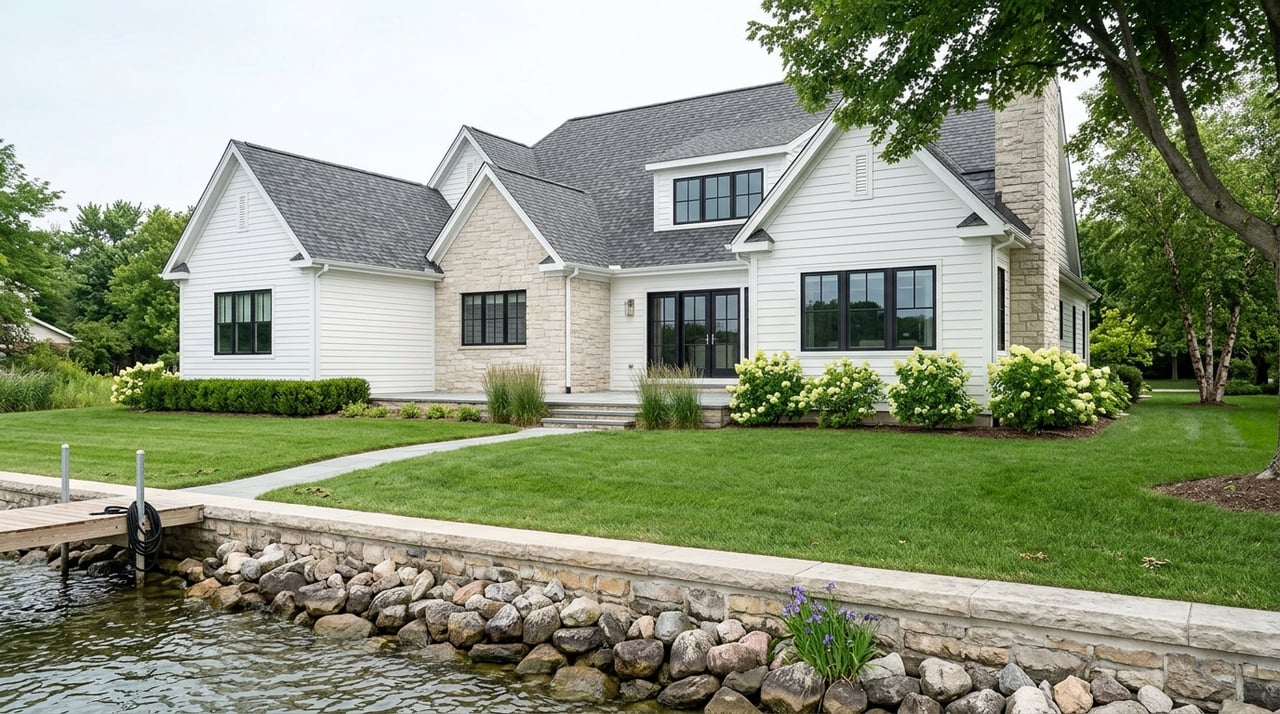
Dreaming about life on Orchard Lake? A waterfront home can offer beautiful views, direct lake access, and a lifestyle that feels like a getaway every day. But before you fall in love with a dock, shoreline, or walkout patio, you need to understand the rules and property details that can shape how you use the home long term. This guide walks you through the key considerations so you can buy with more confidence and fewer surprises. Let’s dive in.
Why Orchard Lake due diligence matters
Buying a waterfront home is different from buying a typical suburban property. In Orchard Lake Village, water level, shoreline condition, boating activity, and local zoning rules can all affect value, insurance, and future plans.
That is especially important because the city’s zoning code treats lots that abut both a road and the water as waterfront parcels, and it uses the legal water level as the water line for ordinance purposes. When you are evaluating a property, that means a survey, lot lines, and lake level are not small details. They can directly affect what is buildable and usable on the site, according to the Orchard Lake Village Zoning Ordinance.
Check the buildable envelope first
Waterfront setbacks can vary by lot
One of the biggest issues with any Orchard Lake waterfront purchase is the setback. The city may use an Established Residential Building Pattern to determine the waterfront setback, and if no pattern exists, the setback is 75 feet in Zones 2, 3, and 4 and 55 feet in Zone 1 under the city zoning ordinance.
That can create major differences from one parcel to the next, even if homes are close to each other on the same lake. If you are thinking about adding onto the home, rebuilding, or changing the footprint later, you will want a current survey and zoning review before you rely on those plans.
Existing features do not always mean legal compliance
It is easy to assume a deck, stairway, dock area, or lakeside improvement is fine because it is already there. That is not always the case. The zoning ordinance has separate rules for waterfront-yard features like certain decks, pools, ground-level projections, and stairs where topography requires access to the water.
In practical terms, you should verify what was allowed, what was grandfathered, and what may need correction later. This is one of the most important ways to avoid buying a beautiful property with hidden limits.
Review docks, hoists, and boat storage rules
Seasonal and permanent structures are treated differently
Orchard Lake buyers should pay close attention to the type of dock or hoist on the property. The city permits docks, boat hoists, rafts, and other seasonal fixtures on waterfront parcels, but state permitting rules may still apply depending on whether the improvement is seasonal or permanent.
According to Michigan EGLE’s inland lakes guidance, permits are required for many inland-lake activities, including some shoreline work, dredging, filling, and structures placed on bottomlands. EGLE also states that permanent docks and permanent boat hoists require permits, while seasonal private noncommercial docks or hoists that are removed at the end of the season generally do not, as long as they do not unreasonably interfere with others or with water flow.
Boat storage limits matter
If boating is a big part of your plan, make sure the property fits how you want to use it. Under the city ordinance, residential waterfront lots are limited to no more than two boats over 14 feet long per lot or parcel, with each boat limited to 30 feet in length and 10 feet in height, and stored out of road view where feasible.
The ordinance also notes that new boat houses are not permitted in the covered single-family zones. If a listing appears to offer more aggressive storage or older lakeside structures, confirm exactly what is permitted before moving forward.
Inspect the shoreline closely
Seawalls, erosion, and riprap deserve extra attention
On a waterfront home, the shoreline is not just scenery. It is part of the property that may need maintenance, repairs, or permitting, and those costs can be significant.
EGLE explains in its shoreline erosion protection guidance that shoreline hardening should be minimized, vertical walls are not recommended, and maintenance is treated differently from full replacement. For you as a buyer, that means the condition of any seawall, riprap, retaining element, or erosion-control feature should be a major inspection item.
Look for signs of water intrusion and settlement
A strong lakefront inspection should go beyond the standard checklist. Pay close attention to erosion, settlement, prior shoreline work, signs of moisture intrusion, and any visible mold concerns.
You should also ask whether visible structures or shoreline projects match the permits that should have been obtained. If there has been flooding or water intrusion, remember that FEMA notes mold can become a problem when water is not addressed quickly, and standard homeowner insurance usually does not cover flood losses.
Understand boating activity and lake access
Location on the lake affects day-to-day enjoyment
Not every stretch of shoreline on Orchard Lake feels the same. The lake has a Michigan DNR boating access site, and watercraft controls set a 40 mph vessel speed limit plus a slow-no-wake zone within 200 feet of the state public access site.
If you want quieter water, less wake activity, or easier docking conditions, where the home sits on the lake matters. This is one of those details that may not show up in listing photos but can strongly affect your experience.
Access-only frontage is not the same as full waterfront rights
Some properties may involve shared frontage or access-only parcels rather than full private waterfront use. Orchard Lake’s zoning code makes an important distinction here.
Parcels used only for access or recreation are limited to family members and occasional guests, capped at six unrelated users at a time, and cannot be used to reach a dock or boat storage area. Boats also cannot be stored, moored, or moved across that frontage, and parking is prohibited within 100 feet of the water’s edge under the city ordinance.
If a home includes shared lake access, make sure you understand exactly what rights come with it. Waterfront and access rights are not interchangeable.
Verify lake level and water conditions
Orchard Lake is among the Oakland County lakes with legally established water levels that receive weekly lake-level reports. That means changing water levels are not just a seasonal talking point. They are a managed condition that can affect shoreline exposure, dock height, and ease of access to the water.
For buyers, this matters in a practical way. A property that feels ideal at one water level may function differently during another part of the year, especially if the dock height, shoreline slope, or near-shore depth is less forgiving.
Start flood and insurance review early
Flood insurance questions should happen before inspection ends
Insurance is often more complicated on waterfront homes than buyers expect. The Consumer Financial Protection Bureau notes that homeowner insurance typically does not cover flood damage, and a separate flood policy may be needed if flood risk is present.
The CFPB also explains that a mortgage on a home in a FEMA Special Flood Hazard Area will generally require flood insurance. Just as important, flood risk can still exist outside mapped flood zones, so it is smart to verify this early rather than treat it as a late-stage detail.
Ask about claims history and future insurability
When you are evaluating a waterfront purchase, ask about prior flood claims, insurance claims, and any nonrenewal issues. Those answers can affect cost, coverage options, and even your comfort level with the property.
This is one area where an early, organized review can save you time and negotiation stress. It is much easier to sort out flood-zone status and insurance expectations before you are deep into inspections and timelines.
Review utilities and drainage history
Orchard Lake Village is served by Oakland County water and sewer systems. Oakland County also reports that the water supply has no known lead service lines and lists Orchard Lake among the municipalities where it operates and or maintains sewage disposal systems.
That is useful context, but it should not replace property-level questions. You will still want to ask about drainage patterns, sewer-backup history, service-line condition, and any past basement water issues, especially on a lakefront lot where grading and water movement matter.
A smart pre-offer checklist
Before you write an offer on an Orchard Lake waterfront home, try to confirm these items:
- The exact waterfront setback and legal water line
- Whether the parcel falls within an Established Residential Building Pattern
- Whether the dock or hoist is seasonal or permanent
- Whether visible shoreline work appears to have the proper permit history
- Whether boat storage, accessory structures, and any older lakeside improvements comply with local rules
- Whether flood insurance may be required or still advisable
- Whether there is a history of sewer backup, drainage work, or shoreline repair
- Whether any condo, subdivision, or association documents include lake-use restrictions
A careful pre-offer review will not solve every issue, but it can help you spot red flags before they become expensive surprises.
Buy with a clear plan
A waterfront home in Orchard Lake can be an incredible long-term purchase, but the right home is about more than the view. You want to understand how the lot works, what the shoreline condition means, how boating activity may affect enjoyment, and whether the property supports your future plans.
That is where strong local guidance matters. If you are considering a waterfront purchase in Orchard Lake Village or elsewhere in Oakland County, Logan Wert Real Estate Group can help you evaluate the details, stay organized, and move forward with a clear plan.
FAQs
What should you verify before buying a waterfront home in Orchard Lake?
- Confirm the survey, legal water line, waterfront setback, dock or hoist type, shoreline condition, permit history, flood-risk details, and any association or shared-access rules.
Do Orchard Lake waterfront setbacks vary by property?
- Yes. Orchard Lake Village may apply an Established Residential Building Pattern, and if none exists, default setback rules can apply depending on zoning.
Can you add a new boathouse on an Orchard Lake waterfront lot?
- The city ordinance says new boat houses are not permitted in the covered single-family zones, so buyers should verify existing structures and future plans carefully.
Do you need a permit for a dock on Orchard Lake?
- It depends on the type. EGLE says permanent docks and permanent boat hoists require permits, while many seasonal private noncommercial docks and hoists generally do not if they meet state conditions.
Does a waterfront home in Orchard Lake automatically require flood insurance?
- Not always. Flood insurance is generally required for mortgaged homes in FEMA Special Flood Hazard Areas, but buyers may still want to consider coverage even outside those mapped areas.
What is the difference between Orchard Lake access frontage and full waterfront frontage?
- Access-only frontage has more limited use. The zoning code restricts things like dock access, boat storage, mooring, and parking near the water on those parcels.